
AI-Driven Development: Why Verification Matters More Than Ever

Discover why AI works best as an engineering partner, helping development teams explore solutions faster, while verification ensures reliable results.
Semiconductor Engineering: How Cache Coherency Simplifies AI Software

This article explains how hardware-managed cache coherency can simplify AI software by coordinating shared data across CPUs, accelerators and chiplets. The article highlights the role of coherent and non-coherent interconnects in building scalable, efficient AI SoCs, while presenting Arteris’ Ncore, FlexNoC and FlexGen IP as complementary solutions for managing data movement.
Navigating ISO 26262 Part 11: A Guide for Semiconductor Architects

Learn how ISO 26262 Part 11 helps semiconductor architects build safer automotive SoCs through architectural planning, automation, and functional safety.
EDN: Hardware security verification must go beyond functional testing
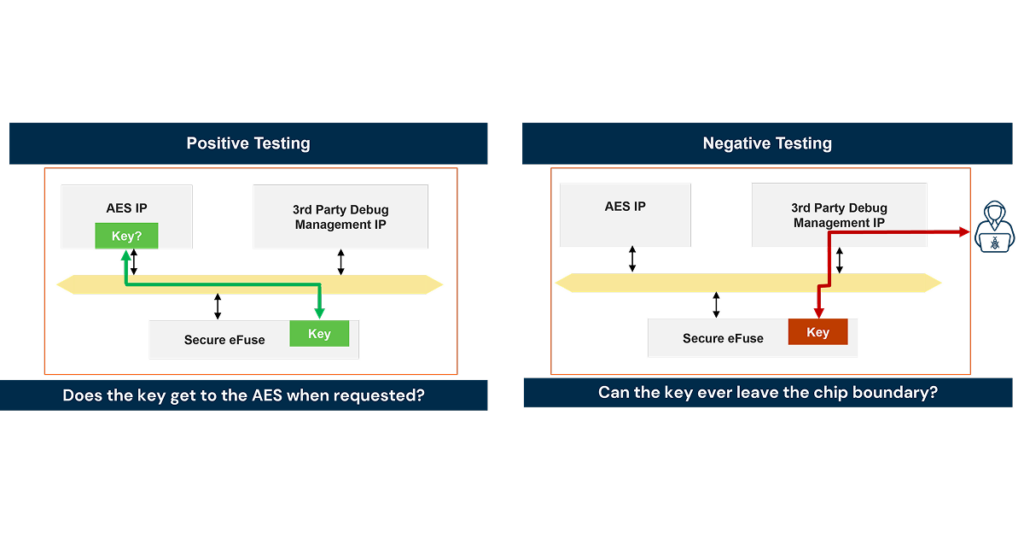
This article explains why functional testing alone cannot uncover the unintended data paths and hardware–firmware interactions that create security risks, and how Cycuity Radix enables teams to define verifiable security requirements, detect violations and measure security coverage across simulation and emulation workflows.
TechRadar: Data movement is the new performance battleground in semiconductor design

The article highlights why interconnect design must become a first-class architectural consideration, with quality of service, determinism and physically aware automation playing key roles across AI data centers, physical AI and multi-die systems.
Electronic Design: The Missing Layer in AI Systems Design is Predictable, Scalable Data Movement

The article explores why predictable, scalable data movement is becoming a critical architectural requirement for AI systems as compute complexity and bandwidth demands continue to grow.
Embedded: Last-Level Caches Matter Even More in the HBM Era

The article explains why last-level caches (LLCs) are becoming even more important as high-bandwidth memory (HBM) is adopted for AI and high-performance computing.
Advancing Europe’s Automotive Innovation Ecosystem: Arteris Continues Its Work in the RIGOLETTO Project

As software-defined vehicles reshape the automotive industry, collaborative innovation is becoming essential to developing secure, scalable computing platforms. Learn how Arteris is contributing to the European RIGOLETTO project, helping advance next-generation automotive architectures through expertise in Network-on-Chip technology, RISC-V integration, and high-performance semiconductor design.
Semiconductor Engineering: Avoid The Hidden Bottleneck Of Integration At Scale

This Semiconductor Engineering article examines how SoC integration has become a major bottleneck as designs scale in complexity, with growing numbers of IP blocks, registers, and hardware/software interfaces.
The AI Journal: Making chiplets work for AI requires more than connectivity

This article explains why building successful AI chiplet architectures requires more than high-speed die-to-die connectivity. It explores how efficient data movement, protocol selection, coherency, and intelligent NoC architecture are critical to maximizing performance, scalability, and energy efficiency in next-generation AI systems.